

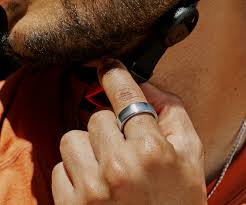
In the rapidly evolving landscape of longevity tech, wearables have shifted from simple novelty step-counters to advanced, medical-grade biometric monitors. While smartwatches have dominated the wrists of the masses, a quieter, sleeker revolution has taken over the fingers of biohackers, health enthusiasts, and longevity seekers: the smart ring.
Leading the charge is the Oura Ring, a masterclass in minimalist design and advanced sensory engineering. But if you are only using it to see how many hours you slept last night, you are barely scratching the surface of what this cellular-level dashboard can do.
Here is a deep dive into the science behind the ring, and exactly how to use its data to build true biological resilience.
To understand why the Oura Ring is so incredibly accurate, we have to look at anatomy. Traditional smartwatches read your biometrics from the top of your wrist. However, the wrist contains thick skin, muscles and tendons, and the arteries sit deep beneath the surface.
The finger, by contrast, is packed with a dense network of superficial capillaries. The digital arteries run right along the sides of your fingers, providing an incredibly clear, strong signal for the ring’s infrared photoplethysmography (PPG) sensors. This allows Oura to measure changes in blood volume and heart activity with up to 99% reliability compared to an ECG—giving you a laboratory-grade look at your cardiovascular and nervous systems while you sleep.
Oura synthesizes billions of data points into three daily scores. Navigating them correctly is the key to mastering your daily health protocols.
Oura doesn’t just track time in bed; it tracks sleep architecture. It breaks your night down into Light, Deep, and REM sleep.
The Readiness Score is your daily green light (or warning sign) for physical exertion. It heavily relies on Heart Rate Variability (HRV)—the millisecond variations between consecutive heartbeats.
Rather than just pushing you to hit an arbitrary 10,000-step goal, Oura looks at metabolic equivalents (METs) and balances your activity against your recovery. It rewards you for movement throughout the day but explicitly penalizes you if you don’t build in adequate recovery time, making it the ultimate tool for avoiding the “fragility trap.”
If you want to move past the basics, here is how to use your new ring as a true metabolic regulator:
Your autonomic nervous system is directly tied to your gut. Try tracking your average nighttime HRV on days you finish eating by 6 PM versus days you eat right up until bed. You will likely see a massive surge in HRV and a faster resting heart rate drop when your body doesn’t have to divert energy toward late-night digestion.
Using real-time Daytime Stress tracking, Oura maps how quickly your body recovers from a stressor (like a high-stakes meeting or a intense physical workout). Watch your “Stress Resilience” trend over a few weeks to see if your lifestyle changes—like red light therapy or improved sleep consistency—are successfully expanding your biological buffer zone.
One of the hardest parts of longevity fitness is knowing when to stop. If Oura detects a spike in your baseline body temperature alongside a nose-dive in HRV, it will recommend turning on Rest Mode. Listen to it. Catching a systemic stress response 24 hours before symptoms appear is the easiest way to prevent burnout and injury.
The true magic of the Oura Ring isn’t that it tells you what to do—it’s that it acts as an un-bribable mirror reflecting your exact daily habits. Within just a few weeks of tracking your metrics, you’ll discover exactly how your body responds to exercise, stress, nutrition, and timing.
In the quest for a longer, more vibrant healthspan, data is power. Slip the ring on, pay attention to the trends, and let your own biology dictate your path to peak vitality.